

How to Control Cost Overruns in Construction Projects
Cost overruns are one of the most common problems in construction, and one of the most damaging. When actual costs exceed the estimated or budgeted costs, the financial burden falls on the contractor and the owner alike. Construction is an integral part of a country’s economy and plays a pivotal role in developing its infrastructure, so those overruns carry a cost well beyond any single project.
The encouraging part is that most overruns are not random. They come from a handful of recurring sources, and a proactive approach with preventive and control measures can reduce them substantially. This article explains what causes cost overruns and how to control them, using the 5Ms framework: Man, Materials, Machines, Methods and Miscellaneous. Each one is a lever you can manage.
The scale of the problem. Research by Bent Flyvbjerg, drawing on more than 16,000 projects, found that 91.5% go over budget, over schedule, or both, with only 8.5% delivering on both. Across large infrastructure and construction projects, nine in ten run over cost, and overruns of up to 50% in real terms are common. McKinsey has similarly reported that large projects typically take 20% longer than scheduled and can run up to 80% over budget. That is the scale of the problem this article sets out to reduce.
Stop wrestling with Primavera XER schedules.
Your team can see your schedule without buying a P6 license.
Start Free Trial No credit card · Windows & Mac · From $344/yr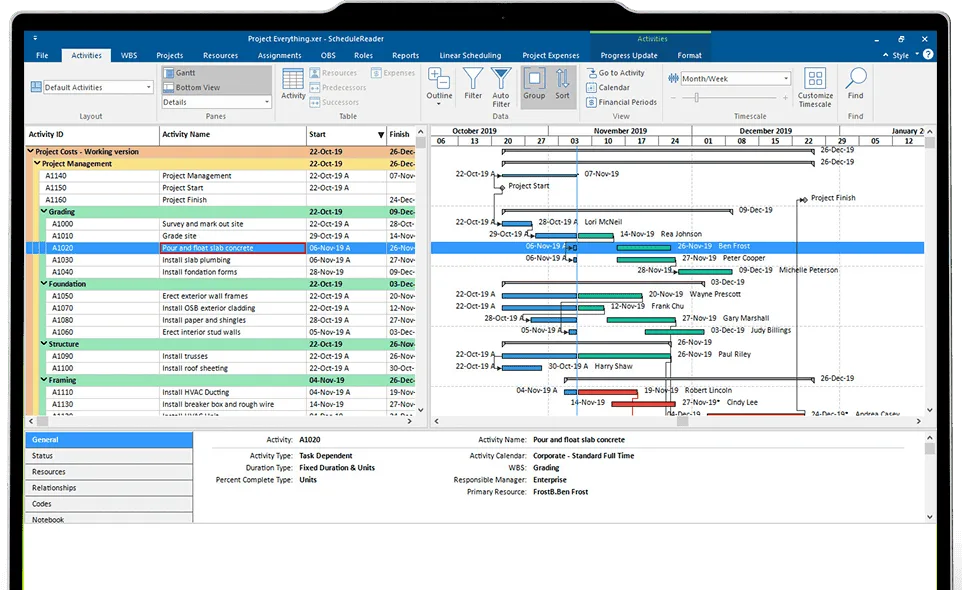
What is a cost overrun in construction projects?
A cost overrun occurs when the actual costs of a project exceed the estimated or budgeted costs. There is no single factor that controls the overall cost of a project. Instead, many factors contribute at once. We have categorized them as the 5Ms:
1. Man
This is the most important M in the discussion. People are the main resource and asset for any organization, and they can make anything succeed or fail.
Every task is directly linked to and managed by people, so controlling this one M can prevent most issues and bring a project back on budget. The main controlling factors to consider:
Experienced team. There is no substitute for experience. Even when everything else is flawless, overruns remain likely if the team executing the work is not up to standard. Selecting well-qualified workers and matching the right people to the right jobs is the first defense against overruns.
Training and skill development. Everything is advancing with each passing year. New technologies, techniques, and the latest software and skills are the need of the time, and putting them to use can save a significant amount of cost. Training and skill development should be scheduled regularly so teams can adopt the latest methods.
ScheduleReader is an example of the kind of tool that helps teams control a project better and avoid cost overruns.
Awards and recognition. Every task is performed by people, which makes morale important to hitting the set target. Timely awards and recognition boost morale and motivation. A sense of being a valued part of a team that recognizes its people makes the best use of time and energy and contributes to the project objective, which helps avoid unnecessary extra costs.
2. Materials

Materials are the most cost-allotted M in the discussion. A major portion of the cost is spent on materials, so saving even a little here saves a larger number in total. The main controlling factors:
Procurement
For a typical EPC contract, around 60% of the overall budget is consumed by procurement, which makes close monitoring and control essential. Points to consider for controlling overruns due to procurement:
- Relationships with suppliers are a key factor. More value can be gained through intense collaboration, or by starting and developing partnership relations.
- Negotiation with vendors must be handled carefully to ensure maximum cost efficiency and transparency. Research the average value of the material ahead of time so you know your figure before the negotiation.
- Choosing popular brands is not always the best option from a cost perspective. When developing a procurement process, weigh all available options against the critical factors of cost and quality.
- For critical materials, timely delivery is the top priority, because a small delay can be costly in terms of idling pre-planned and deployed resources and commitments. Early engagement with the supplier and engineering team during the FEED stage of a project can save valuable time and money.
- Operational costs can be reduced significantly by streamlining processes, using specialized supply chain software, and keeping up-to-date records of all items and vendors.
Storage and handling
Proper storage, aligned with construction priorities, saves time, especially for small items that are often lost and then require another lead time for ordering and delivery, which forces extra utilization and deployment of resources beyond the planned periods.
All heavy lifts should be planned so equipment is placed on location as soon as it arrives at site. Most heavy lifts are rented from lifting contractors, so double handling costs a lot and should be avoided.
3. Machines

Construction activities rely heavily on machinery and equipment, and effective utilization of these items helps project managers control cost overruns. Most heavy equipment, such as excavators, dumpers, concrete equipment or cranes, is hired on a rental basis, and the contractor bears substantial rent for those services. Improper and unplanned use of equipment can affect the budget heavily. Control measures to prevent overruns for this M:
- Company-owned equipment should get priority over rented equipment wherever possible.
- A cost and benefit analysis can show whether buying new equipment is worth it. This adds to company assets, lowers the depreciation charged to future projects, and saves on cost overruns.
- The right equipment should be hired at the right time. Idling should be avoided at all times, and equipment should be available when the task is scheduled. ScheduleReader helps here by showing the project manager when important equipment is scheduled for specific tasks, which saves unnecessary cost charged to the project and avoids misunderstandings in the flow of the assignment.
- Equipment utilization should be well coordinated and optimized. Overuse of any machine increases maintenance and, with it, cost.
- Productivity, POL consumption, and breakdowns of all machines should be recorded regularly, with timely controlling measures. Any abnormal machine should be removed from the project immediately.
4. Methods
The method and procedures for executing any task vary, with a significant impact on overall cost. Items under this header that affect cost and must be controlled:
Estimating method
An incorrect or flawed cost estimate can seriously affect the final cost of the project. This leads to an unreliable schedule and increases the risk of a cost overrun. The estimate should be prepared, or at least reviewed and validated, by an experienced cost estimator who is cognizant of the scope of work.
Often, a cost estimate is compiled with an attitude of arriving at the lowest cost to win the project. That can lead to cost overruns once actual work is executed, so the estimate should be optimized during the estimation phase.
Scope and design changes, change orders, contract terms
All construction is driven by the engineering design, so a defective design or modifications will inevitably lead toward cost overruns. Design changes can come from the contractor side, through human error or site changes, or from owner requests for scope changes.
Human errors can be avoided through the proper training and experienced staff described above. Changes from the client side should be addressed through proper change orders. Formal contractual terms covering the claim of change orders and modifications from the client side should be part of the contract, to avoid disagreements during construction.
Project schedule

An unrealistic and over-optimistic schedule is another factor that contributes to cost overruns. Schedules should be developed by experienced planners in consultation with the project manager and discipline engineers. All the inputs that drive the schedule, such as engineering deliverables, material deliveries, resource availability, and mobilization, must be factored in correctly.
Climate conditions such as extreme cold and heat, along with public holidays, must also be reflected in the assigned calendars. These conditions affect field productivity and delay handover, which drives cost overruns.
Various software tools provide better scheduling options, including Primavera and ScheduleReader. ScheduleReader is a strong option for viewing files exported from Primavera P6 in a more presentable way, guiding the project manager through project activities and toward the planned milestones so corrective action can be taken when needed.
Monitoring and reporting system
A dedicated project controls team with proper systems and procedures is highly recommended for accurate monitoring and reporting.
As the project progresses, regular updates of schedule and budget must be made and reviewed to confirm the project is on track, and to take action when slippages appear. Implemented Graphics Reports in ScheduleReader give a full overview of project health and help project controllers and managers evaluate status and confirm whether progress matches the plan.

5. Miscellaneous
Beyond the four Ms above, some items cannot be controlled during the construction stage and must be addressed during the bidding and contract stage. These include escalation, inflation, and currency exchange rates. Build them into the pricing and contract terms up front, because they are outside the project team’s control once work begins.
Corrective action: what to do when an overrun happens
Even with strong controls, an overrun can still appear. When it does, act on it deliberately:
- Implement cost controls immediately. Freeze discretionary spending, reallocate resources where possible, and review pending change orders with a tighter lens.
- Identify the root cause. Determine whether the driver was a single task that consumed more resources than planned, an accumulation of small changes, or an external factor such as a price spike or a delivery delay. Root cause analysis separates one-off deviations from structural problems and points corrective action at the real issue.
- Re-forecast. Update the estimate of cost to complete from the current cost performance rather than the original plan, so the team is working from reality.
- Strengthen controls going forward. A cost overrun is an opportunity to improve. Review the processes that allowed it, such as estimating practice, change management discipline, and cost-tracking frequency, and tighten them for this project and the next.
Conclusion: the best ways to avoid cost overruns in construction projects
Cost overruns are a frequent occurrence in construction, with many contributing factors. This article has covered the key factors that lead to a cost overrun and the practices that influence them, drawn together through the 5Ms: people, materials, machines, methods, and the external items outside your control.
Manage each M deliberately, monitor cost and schedule against the baseline in real time, and re-forecast when the numbers move. Together, those habits turn cost overruns from an inevitability into a problem you can see coming and reduce.
Frequently asked questions
What causes cost overruns in construction projects?
The most common causes are inaccurate estimates, scope creep and change orders, material price fluctuations and supply chain disruption, poor planning and scheduling, unexpected site conditions, design errors, and communication failures across the project team.
What is a cost overrun?
A cost overrun is when the actual costs of a project exceed the estimated or budgeted costs. The difference between the two is the overrun.
How common are cost overruns?
They are very common in large construction. Flyvbjerg’s research across more than 16,000 projects found 91.5% go over budget, over schedule, or both, and among large infrastructure projects nine in ten run over cost, with overruns of up to 50% being common.
How can cost overruns be prevented?
Use accurate, experienced estimating, a realistic schedule built by experienced planners, a formal change management process, careful procurement and resource planning, real-time cost monitoring against the baseline, contingency for escalation and inflation, and regular schedule and budget reviews.
What should you do when a project goes over budget?
Identify the root cause, implement immediate cost controls such as freezing discretionary spending, re-forecast the cost to complete from current performance, and tighten the controls that allowed the overrun so it is less likely to recur.