What Is the DCMA 14-Point Assessment?
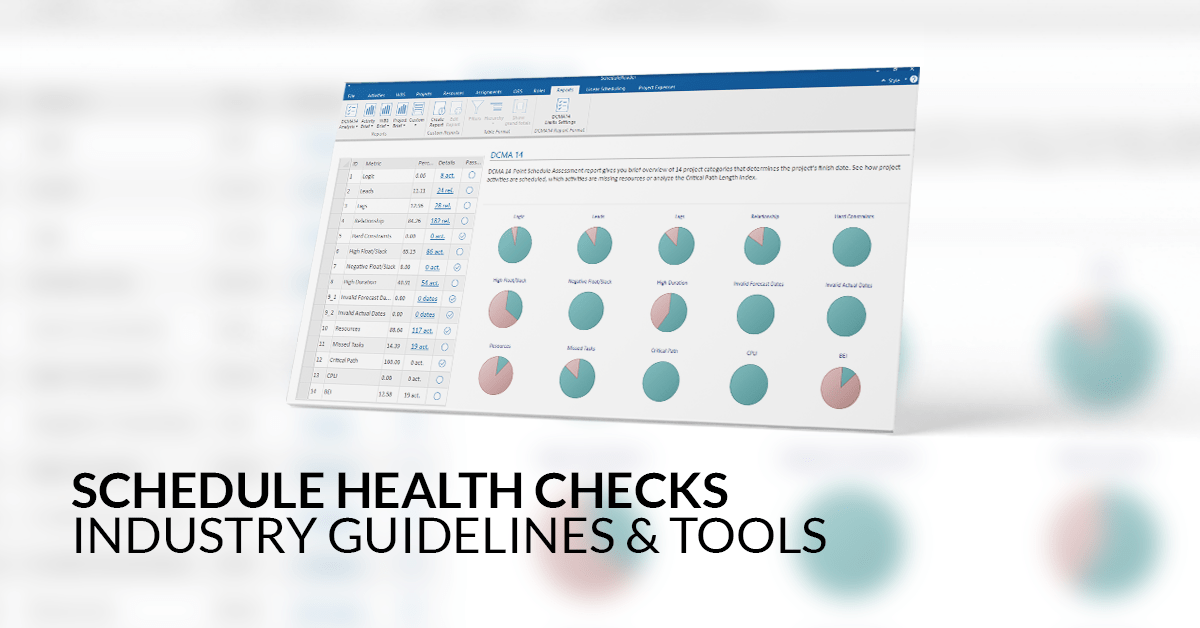
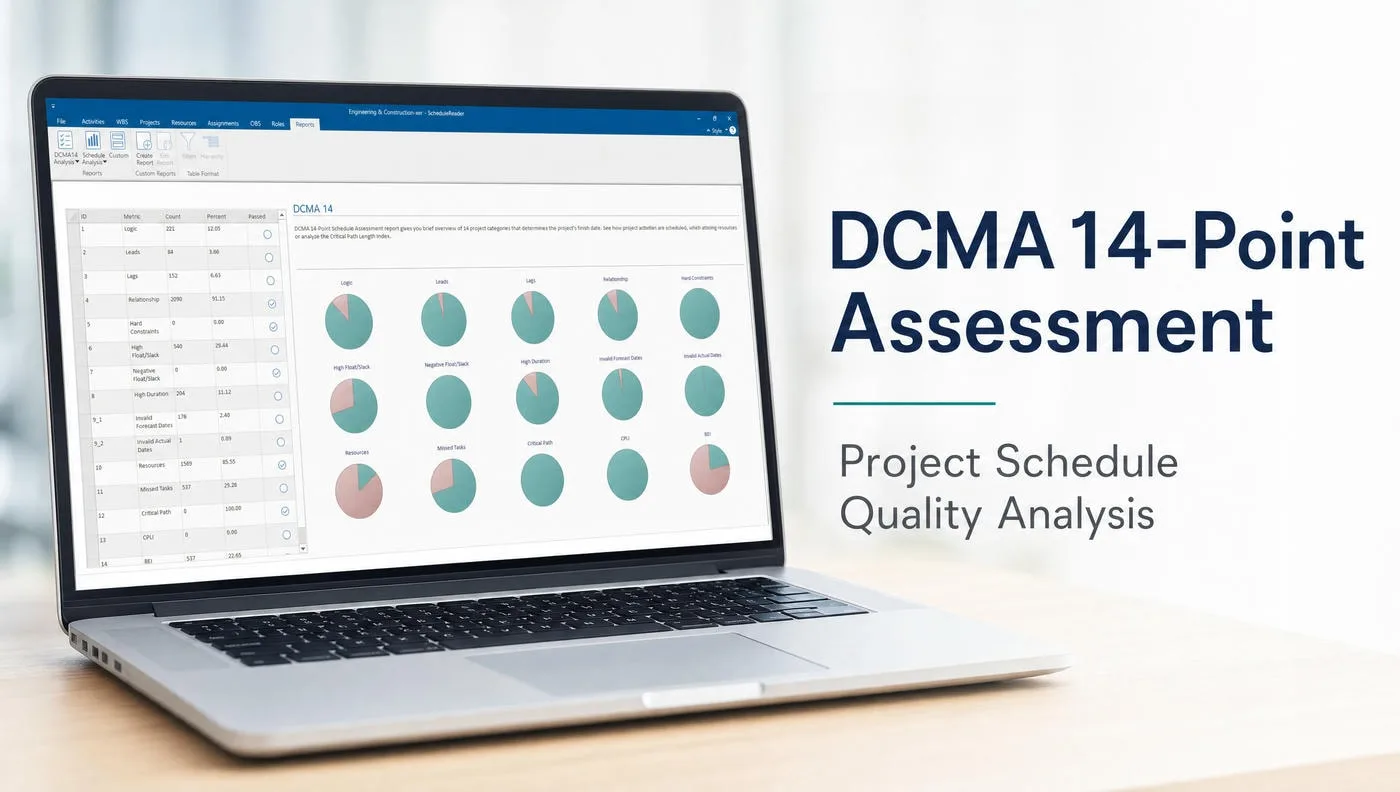
DCMA 14-point Schedule Assessment is a project management guideline established on 14 metrics that provide the possibility to make a qualitative and quantitative evaluation of the schedule. It is a…

50 articles filed under Project Scheduling.
DCMA 14-point Schedule Assessment is a project management guideline established on 14 metrics that provide the possibility to make a qualitative and quantitative evaluation of the schedule. It is a…
The difference between free float and total float comes down to scope. Total float is how long an activity can be delayed before it pushes the project’s completion date. Free…
Baseline schedules are the cornerstone of every construction and engineering project. If you talk to any seasoned scheduler, they’ll emphasize how crucial the baseline schedule is for measuring performance, spotting…
Risk analysis is a critical component of effective project management. Projects inevitably face uncertainties that can disrupt planned timelines, affecting budgets, resources, and overall delivery. Risk analysis helps uncover these…
Effective communication in construction projects is the pillar of successful project completion. On these projects, timelines are large, budgets can span millions, and multiple teams need to work together. This…
The construction industry is always changing. New materials and methods come out all the time. Today, there’s a big shift with software technology. It’s making a huge difference in how…
Effective scheduling is the cornerstone of successful project management. For large-scale projects involving numerous tasks, resources, and dependencies, maintaining accurate and easily shareable schedules is critical. This is where XER…
In the construction industry, project delays have long been a challenge and 2024 is no exception. These delays not only increase costs but can also damage reputation, leading to a…
Project controls is a recognized professional role and function within project management. Although there are multiple definitions of what project control is, it commonly refers to the data-driven processes used…
A Gantt chart turns a project schedule into a visual timeline that shows activities, dates, duration, milestones, progress, and—most importantly—the relationships between work items. When the underlying schedule is sound,…
Project management is a delicate line between staying on schedule and within budget. Earned Schedule (ES) emerges as a valuable tool within this framework, offering a time-based perspective that complements…
As the key drivers of project success, project managers are entrusted with managing project costs and ensuring timely delivery. In this crucial role, project scheduling tools emerge as indispensable aids,…
Effective management is crucial for the success of any project. Construction management not only ensures that projects are completed on time and within budget, but also maintains the quality and…
In the fast-paced world of project management, staying informed about the latest trends, best practices, and innovative strategies is essential for being successful. As project managers navigate the complexities of…
In our series of articles dedicated to project control books, we will explore titles based on historical popularity and general acclaim within the project management community. Our first article focuses…
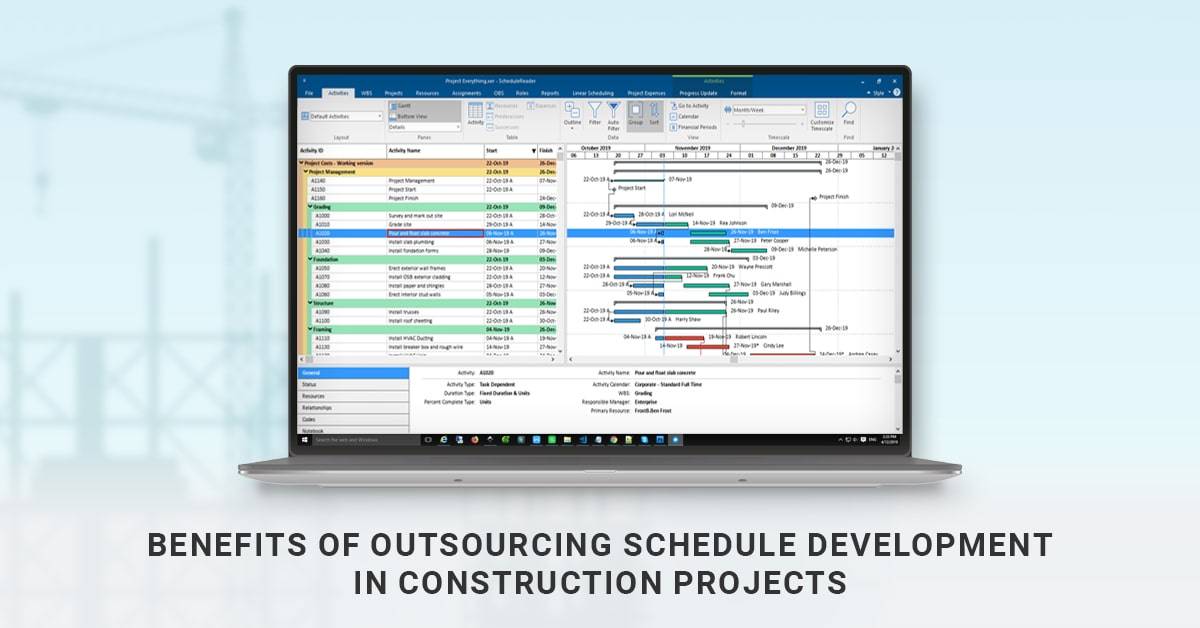
A construction project schedule is a roadmap to successful project delivery. It details the activities and subtasks for every phase of the project ranging from project initiation until project closeout,…
In the realm of project management, fluency in terminology is akin to wielding a powerful tool, and nowhere is this more apparent than in the domain of scheduling, where precision…
The everyday project management work comes with various complexities, among them leads and lags. These are two critical concepts that …
Industry rules, standards and guidelines exist to help the schedule logic and contribute to its overall quality, and software tool such as ScheduleReader, Deltek Acumen Fuse and others have been…
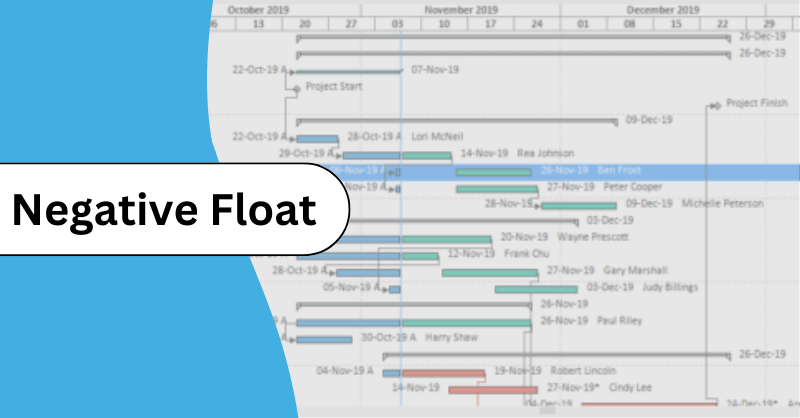
What is negative float in project planning and scheduling? What are the different float types and how they can affect your project? How do you manage negative float in Primavera…
Pull Planning vs CPM Scheduling, how do these planning methods compare between eachother? “Failing to plan is planning to fail” The truth is it is easier said than done. Choosing…
Time is money. That is perhaps one of the most shared and lived-by aphorisms in our everyday lives and work principles. This makes the prediction of success rates and forecast…
Understand, Plan and Control with PERT and CPM – The Differences Between PERT vs CPM It is important for the project manager to use diligence in schedule development that puts…
Asta Powerproject vs Primavera P6. What are the differences? Primavera P6 and Powerproject are mainly used as construction project portfolio management solutions. Both are powerful in planning and scheduling mid…
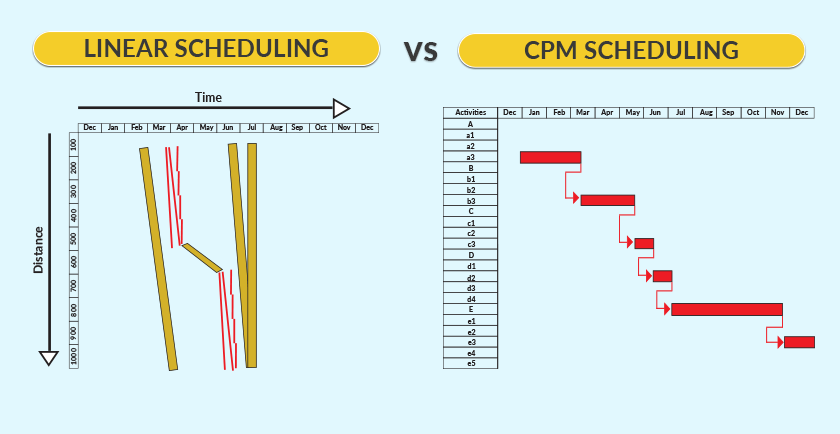
Linear scheduling Vs Critical Path Method? What are the differences? “Failing to plan is planning to fail” A big part of any project manager’s role is to ensure the creation…
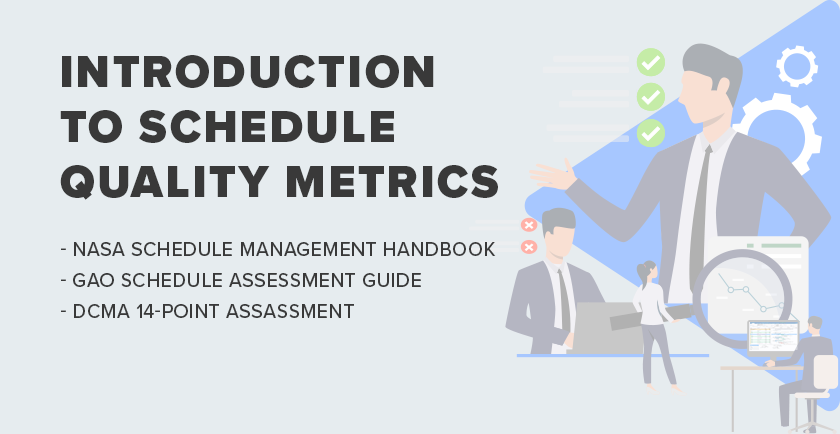
Schedule quality assessment metrics are utilized in a variety of industries, especially in the aerospace and government sectors. For years schedule metrics have been used in conjunction with Earned Value…
Planning and scheduling certifications are certifications that are granted by a formal body or organization with the power to teach people and assess whether or not their expertise meets industry…
Construction Claims Explained Construction claims can be described as actions for a mandate for something due against a contractor by the owner or vice versa, in which cases subcontractors and/or…
What is Contingency Reserve in Project Management and How Does it Work? In project management, we often come across terms such as cost contingency, contingency reserve, and management reserve (MR)….
Introduction to the Critical Path Method, Scheduling with CPM The Critical Path Method, or CPM, is a scheduling technique that identifies the longest path of logically dependent and connected activities…
There is More Than One To Complete Performance Index (TCPI) The Earned Value Management (EVM) index of the To Complete Performance Index (TCPI) is a mathematical projection of the cost…
What is an “S Curve”? An S curve, named due to the S form-shaped shape of a curve, is a management tool that depicts a mathematical graph of relevant cumulative…
The Schedule Performance Index (SPI) and the Cost Performance Index (CPI) are the two Earned Value Management (EVM) indices that tell you whether a project is running on schedule and…
Earned Value Management (EVM) is the measurement technique that lets project managers and controls measure project performance and progress against cost and schedule. It finds variances by comparing work planned…
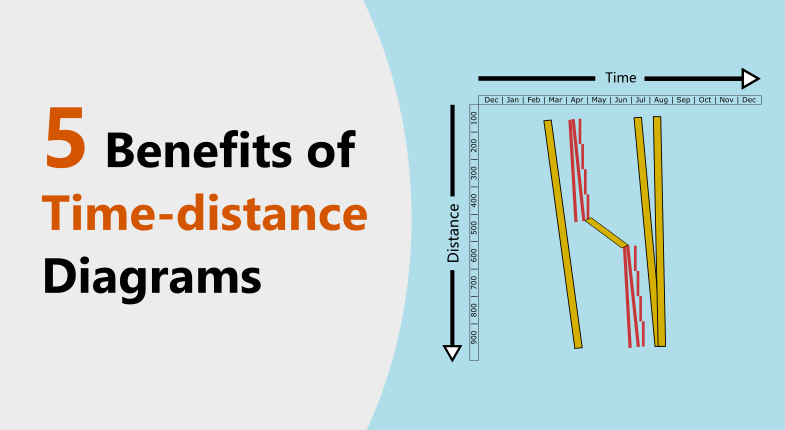
What is a Time-Distance Diagram in Linear Project Management? In linear project management, a Time-distance diagram or often termed a linear schedule is a project management tool to present a…
Earned Value Management (EVM) has become one of the most widely adopted methodologies for measuring project performance in terms of costs and schedule across construction, engineering, infrastructure, energy, aerospace, defense,…
What is CPM Scheduling? The CPM scheduling method is one of the most important and widely used techniques when it comes to planning and managing construction & engineering projects with…
Cost overruns are one of the most common problems in construction, and one of the most damaging. When actual costs exceed the estimated or budgeted costs, the financial burden falls…
Schedule delay analysis is described as the research and analysis of an event, performed with the goal to identify the reason for a project delay. Common in the construction industry,…
You might think that Primavera P6 is used solely by Engineers and Schedulers during review of construction delay analysis. Well, you might need to rethink that. Let me elaborate. In…
Construction projects are one-off strives with many distinctive features like a long period, abominable environment, complicated processes, financial intensity, and such technological and organizational complexity creates enormous risks which resulted…
Daily project reporting is important! I wish that I could have a dollar for every time I have written on the subject. Really what I wish is that writing about…
Industry Rules, Standards and Guidelines Will Not Transform A Poorly-Designed Schedule Into A Great Project Schedule There is only one element that will allow the creation of a great baseline…
The Problem: Project Schedulers lose too much time on a daily basis, creating separate PDF documents for each project team that has no other way of receiving the project schedule information…
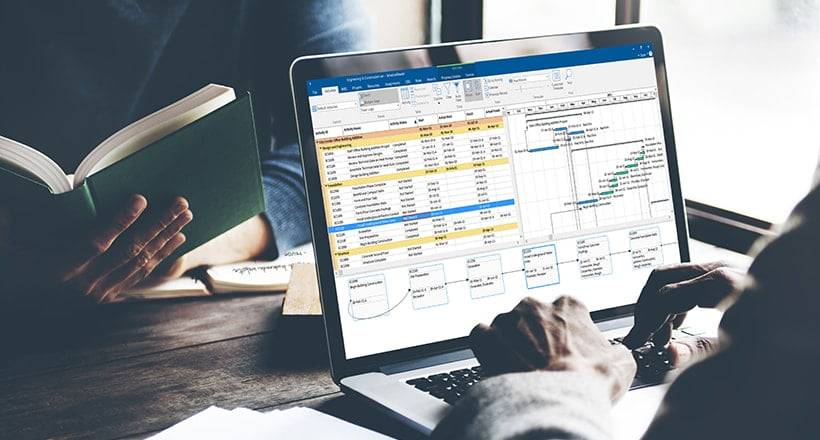
Mastering a new project portfolio management software such as Oracle’s Primavera P6, PPM or EPPM is both challenging and fulfilling. However, at first sight, it might look overwhelming (or even…
As a scheduler, using scheduling software is a must and you are often left to choose between microsoft project vs primavera p6, depending on the type of the project. The…
Looking for P6 training online? Then you came to the right place. Fast-paced, large-scale projects are becoming the standard, and managing all their components takes an advanced toolset that keeps…
Whether you are a planning engineer, project scheduler, project controls specialist, or Primavera P6 administrator, it is just as important to stay current with industry’s best practices as it is…
The job at the scheduler can be challenging enough when your team is together, but what if it is an offshore project? What do schedulers need to be aware of…
Being a Project Manager doesn’t require creating the schedules, therefore they usually don’t have a full Oracle® Primavera® P6® license and I receive the schedules in PDF format. This is a…
Get started
Open a real .xer or P6 XML export read-only - free for 15 days.